Subtotal $ 0


REINTEGRATION PROJECT · COLOMBIA
Stories of New Beginnings
People, opportunities and life journeys
Migration and return are experiences that can profoundly transform a person’s life. Behind every story are difficult decisions, challenges to overcome and dreams that, even in times of uncertainty, deserve a new opportunity.
The Frontex Reintegration Project in Colombia, implemented through IRARA and ASODDHH, aims to support returnees as they rebuild their lives, providing them with tools and assistance to help them move towards sustainable reintegration. Through psychosocial support and the strengthening of productive initiatives, the programme helps participants recognise their abilities, navigate the challenges of return and explore new opportunities for their well-being and stability.
For us, each reintegration journey represents much more than providing assistance. It means accompanying a person through a period of change, recognising their potential and helping them access the tools they need to build their future. We understand that every journey is different and that progress takes place at an individual pace, shaped by each person’s circumstances, abilities and aspirations.
In this section, we share the stories of people who have received support through the programme, with deep respect for their dignity and privacy. Their experiences help us understand how timely assistance, guidance and opportunities can contribute to transforming moments of uncertainty into new beginnings.
These stories are not only about the challenges of returning home, but also about the abilities, determination and aspirations that continue to move forward. They remind us that reintegration means more than returning to one’s country; it also means finding opportunities to rebuild one’s life, strengthen independence and look towards the future with renewed possibilities.
By sharing these stories, we aim to foster empathy, raise awareness of the realities of migration and recognise the value of cooperation between individuals and the organisations that make these processes possible. Behind every story is a person with rights, abilities and aspirations, and every opportunity to move forward can make a meaningful difference in their journey.
Alonso: A New Opportunity to Rebuild His Life in Colombia
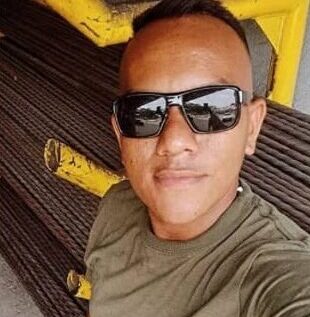
Alonso is a Colombian citizen who emigrated to Portugal in search of international protection due to the presence of illegal armed groups in the city where he lived. Later, after receiving information about his situation, he learned that he would need to return to Colombia.
As he faced this new chapter in his life, Alonso decided to participate in the Frontex Reintegration Project in Colombia, implemented through IRARA and ASODDHH. Although he initially felt discouraged by the challenges of starting over, psychosocial support sessions helped him regain his enthusiasm and approach this transition with a more positive outlook.
With the aim of establishing himself in a safer environment, Alonso decided to move to another city in Colombia rather than return to areas affected by conflict. There, he found a job in his area of expertise and began building a new chapter of his life.
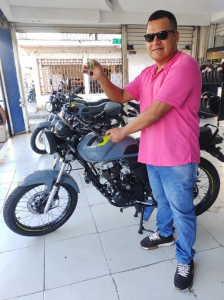
As part of the support provided through the programme, Alonso was able to acquire a motorcycle to facilitate his transportation and furnish his new home with essential items. These resources helped improve his living conditions and supported his settlement in the new city.
Alonso’s experience highlights the importance of psychosocial support and practical assistance throughout the return and reintegration process. With the opportunities provided by the programme, he was able to settle in another part of his country, move towards greater stability and begin building a new life project.
Miguel: From Uncertainty to Building His Own Future
At the age of 25, Miguel returned to Colombia from Portugal in July, facing the challenge of starting a new chapter in his home country. At first, he was unsure how to earn a living or how to move forward with his future. However, with the support of the Frontex Reintegration Project in Colombia, led by IRARA and ASODDHH, he began to discover new opportunities to move forward.
Through the psychosocial support provided by the programme, Miguel received assistance in coping with the emotional challenges of migration and adapting to the changes brought about by his return. This process helped him look at his situation from a new perspective and take steps towards rebuilding his life project.
With support from the Reintegration Project, Miguel also strengthened his plans for developing a business in the construction sector. Although he initially saw himself working only as an independent contractor, he gradually broadened his ambitions and turned his initiative into a company of his own.
Today, Miguel runs his own company and has secured several contracts with construction firms seeking his professional services. This progress represents an important step in developing his business activities and consolidating his professional career in Colombia.
Miguel’s story illustrates how psychosocial support, combined with assistance to strengthen productive initiatives, can help people returning to their home country identify new possibilities and develop their capabilities. His experience shows how, with support and opportunities, the challenges of returning home can become the starting point for new plans and a more promising future.
Miriam: Turning New Opportunities into a Business of Her Own
Miriam is a 26-year-old Colombian woman who emigrated to Finland in search of a better quality of life. When she learned that she would need to return to her home country, Colombia, she faced the challenge of beginning a new chapter. However, her return also presented an opportunity to forge a new path.
Through the Frontex Reintegration Project in Colombia, led by IRARA and ASODDHH, Miriam received guidance and tools to help her re-establish herself in her country and strengthen her productive initiative. This support played an important role in advancing her plans and helping her consolidate her business activities.
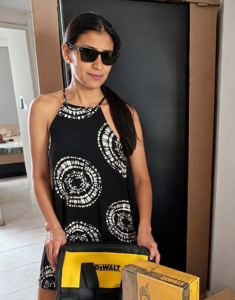
Today, Miriam owns her own carpentry business and regularly secures contracts for projects that help enhance homes and commercial premises. Her business allows her to put her skills into practice and develop a productive activity in Colombia.
Miriam expresses her gratitude for the support she received through the Reintegration Project, which accompanied her throughout her return process and helped her strengthen her business initiative.
Her story illustrates how access to tools and opportunities can help people returning to their home country resume their plans, develop their abilities and build new prospects for the future.
Ana Lucía: Life Story and Reintegration
Ana Lucía is a young Colombian woman and single mother whose story reflects resilience, the ability to rebuild a life plan, and the importance of humanitarian support for migrants experiencing situations of vulnerability.
Approximately three years ago, Ana Lucía was forced to leave Colombia due to the difficult security conditions she was facing in a rural area near Barranquilla. At the time, she had managed to develop a small business that was gradually growing and represented a source of income and an opportunity for her to move forward with her son. However, the presence of armed actors in the area and the threats she received, including demands for the so-called “war tax” in order to continue her economic activity, made her continued stay in the area increasingly difficult and dangerous.
Faced with this situation, and seeking to protect her son and ensure better conditions for her family, Ana Lucía made the difficult decision to migrate to Germany in the hope of beginning a new chapter in her life. Once there, she initiated an application for international protection, which was accepted. Nevertheless, her stay in the country was accompanied by a number of challenges.
Adapting to a new environment, learning the language and balancing her work responsibilities with caring for her young son limited her opportunities to secure stable employment. On many occasions, her working hours conflicted with her son’s care and support needs, making it difficult for her to maintain continuous employment. In addition, she faced difficulties relating to her immigration and documentation status, to the extent that the German authorities asked her to consider returning voluntarily to Colombia.
In this context, Ana Lucía became aware of the possibility of participating in a voluntary return and reintegration programme, supported by IRARA and ASODDHH within the framework of European cooperation. This alternative enabled her to return to Colombia with appropriate support and to access a process aimed at rebuilding her life plan.
Upon her return, she received timely psychosocial support and assistance in identifying her abilities, needs and goals, which enabled her to establish a life plan with short- and long-term objectives. Through hard work, determination and the support received throughout the process, Ana Lucía was able to make significant progress towards economic independence.
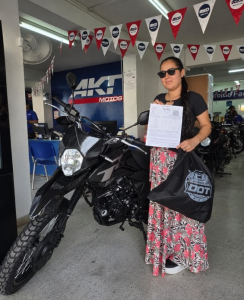
One of the main achievements of this new stage was the purchase of a motorbike, which became an essential tool for carrying out her work. She currently works as a delivery courier for a well-established company in Colombia, where she has a stable income, statutory employment benefits and flexible working hours. This allows her to provide for her family while also meeting the needs of her son.
For Ana Lucía, returning to Colombia did not mean giving up on her dreams, but rather finding a new opportunity to rebuild them based on her own circumstances. Today, she recognises that the support she received was fundamental in transforming a period of uncertainty into an opportunity to regain her independence, strengthen her capabilities and look towards the future with renewed hope.
Ana Lucía expresses her deep gratitude to the institutions, organisations and professionals who contributed to this return and reintegration process, as well as to the cooperation programmes that provide dignified and supported alternatives for migrants experiencing challenging circumstances.
Her experience demonstrates that a supported return can become the beginning of a new opportunity. Beyond simply returning to a place, it means regaining confidence, rebuilding connections, strengthening personal capabilities and having the tools needed to begin planning for the future once again.
Ultimately, Ana Lucía’s story is one of resilience, hope and new opportunities: the story of a woman who, despite the difficulties she encountered along the way, chose to start again and build a more stable future for herself and her son.